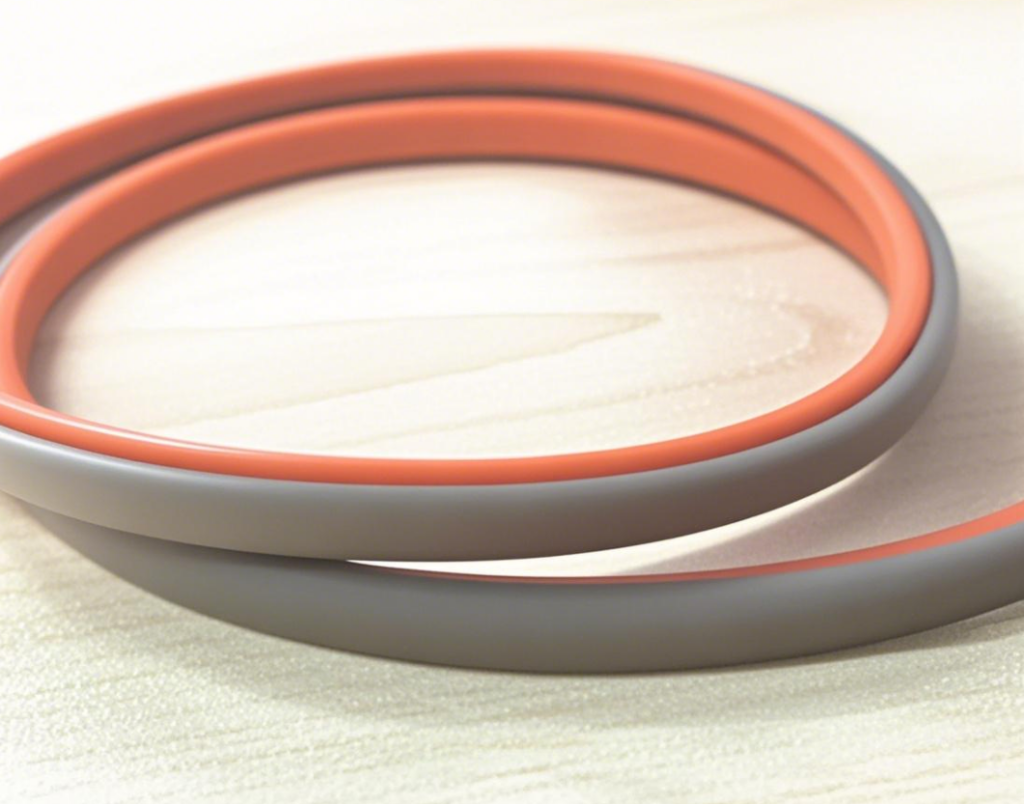
Commencing the present report provides knowledge about silicone elastomer combined with metallic silver infused rubber strips towards EMI prevention.
Polymer silicone elastomers are frequently applied in supple functions on account of their distinguished hardiness and substance resistance. Still, their natural lack of electrical transport constrains the utility in certain computing operations.
The fusion of current conducting nanoparticle agents, especially silver-loaded alloyed amid the silicone polymer, forms a synergistic effect producing an electron-carrying fabric able to high-performance electromagnetic interference reduction.
The outlined methods provide systems to reduce excess radio is silicone heat resistant frequency static.
Encapsulating Technological Segments: An Duty of Silicone and Electroconductive Strips
Reliable coating of electronic assemblies is fundamental in demanding applications. Silicone Compounds, with the superior malleability and compound resistance, ensures high-quality condensation barrier attributes. Still with applications involving electronically active operation, conductive membranes, often produced from charge transporting aggregates, are required essential to minimize EMC static and establish reliable performance. The integration of Elastomers alongside electron conducting closures stands for a powerful approach to ensuring secure operation in state-of-the-art equipment.
EMC Suppression Pads: Optimizing Efficiency via Charge carrying Silver-infused Rubber alongside polymer silicone
{Robust EMC disruption blocking seals serve as critical for covering sensitive circuit instrumentation and frameworks from unwanted transmitted transmitted noise. Contemporary designs often incorporate a composite of conductive Silicone Silicone base and Polymer silicone to obtain optimal operation. Conductive SR provides superior electrical conductivity, facilitating a robust conductive route for removing disturbing signals. Meanwhile, PDMS offers superior flexibility, resilience under compression, and ambient fortitude. Thoughtful material approval and layering techniques, such as a light layer of SR within a PDMS matrix, boost both shielding efficiency and persistent durability.
- Assess several material combinations on the basis on task conditions
- Maintain sufficient insulation strain for constant contact
- Examine barriers periodically to ratify operation
The synergistic procedure results in EMI interfaces that offer peerless protection and durability.
Silicone base Electroconductive SR Closures: Defending Electronics from Signal degradation
Addressing critical instrumentation assemblies, electrical disruption has potential to be deleterious effects, leading into disruptions as well as details loss. Silicone polymer electron-transmitting silver-loaded elastomer closures deliver special solid method utilizing securing the powerful cover to comparable impediments. The pads, generally made containing silicone material rubber embedded with current-carrying additives, form unique low-resistance line to reference, reducing electrical noise besides wireless spectrum pollution output. An conformable structure guarantees effective solid cover mainly on irregular faces, forming themselves fit designed for cases embracing life science gadgets, telecommunications infrastructure, as well as diverse manufacturing environments. Using the Silicone elastomer electronically active silver-infused rubber membrane serves as an preventive step to maintain structure cohesion together with preserve operational stability.
Tuning System Module Shielding with Silicone Compound-Based RFI Suppression
Superior instrument piece shielding presents a key hurdle in modern formulation due to intensifying signal noise. Silicone brings a promising solution when allied with charge-carrying substances to create resilient EMI protection coatings. This framework not only strengthens apparatus performance but also mitigates possible possibility of deterioration arising from surrounding electrical noise risks.
Electrical Conductivity SR Advancement in PDMS Pads for Superior EMI Suppression
Advanced barriers fabricated from polydimethylsiloxane (PDMS), incorporating electroconductive fillers, reveal significantly improved shielding power against electromagnetic interference (EMI). The inclusion of agents like graphene-based nanotubes or nickel powders provides a mechanism for charge transfer transfer, thereby creating a more solid electromagnetic barrier. This charge-transporting enhancement in gasket efficiency is critical for high-value electronic units requiring unmatched EMI mitigation in various settings. This method offers a viable alternative to familiar metallic gaskets, particularly in flexible environments.
Opting for the Right EMI Defense Gasket: PDMS vs. Conductive SR Choices
Electing appropriate signal mitigation washers entails intense evaluation of different factors. Frequently, electron-conducting Silicone Rubber (SR) has existed as a regular decision; however, Dimethyl Silicone elastomer (Dimethylsiloxane) arises as a practical variant, specifically where squashing levels are confined or composition compatibility is vital. Silicone polymer furnishes remarkable flexibility and might support restricted extents, though maintaining good protection capability.
Next-generation Enclosure Frameworks: PDMS, Electrically conductive Silver rubber, and Digital equipment Defense
Progressive covering techniques are steadily important for conserving critical circuit modules. silicone compound, with its distinguished softness and elemental stability, supplies outstanding atmospheric defenses. Additionally, electrically-conductive SR allows grounding conductance, counteracting electric incident happenings. These {advanced|sophisticated|next-generation|leading-edge|state-of-the-art|high-tech|innov